The Shift in Defense Venture Capital
Until recently, venture capitalists largely steered clear of defense startups. Investments in the sector were viewed as morally controversial, and the process of securing government contracts was too lengthy and uncertain to justify venture funding.
But that sentiment changed rapidly after conflicts in Ukraine and Iran began to deplete the U.S. military’s missile supply. Startups that prove they can build equipment fast and affordably now stand a real chance of landing a Pentagon contract on an expedited timeline.
Four years into the defense tech boom that arguably began when Russia invaded Ukraine, the storied Silicon Valley venture firm Benchmark is placing its first bet on a pure defense startup.
Benchmark Leads Seed Round
Benchmark is leading a $25 million seed round into Furientis, a startup on a mission to mass-produce interceptor missiles. Just one year old, the company has already secured a funded Pentagon contract to build mid-range interceptors. The startup was valued at $125 million, according to a person familiar with the company.
Furientis’ seed round follows a $5 million pre-seed that was announced in May.
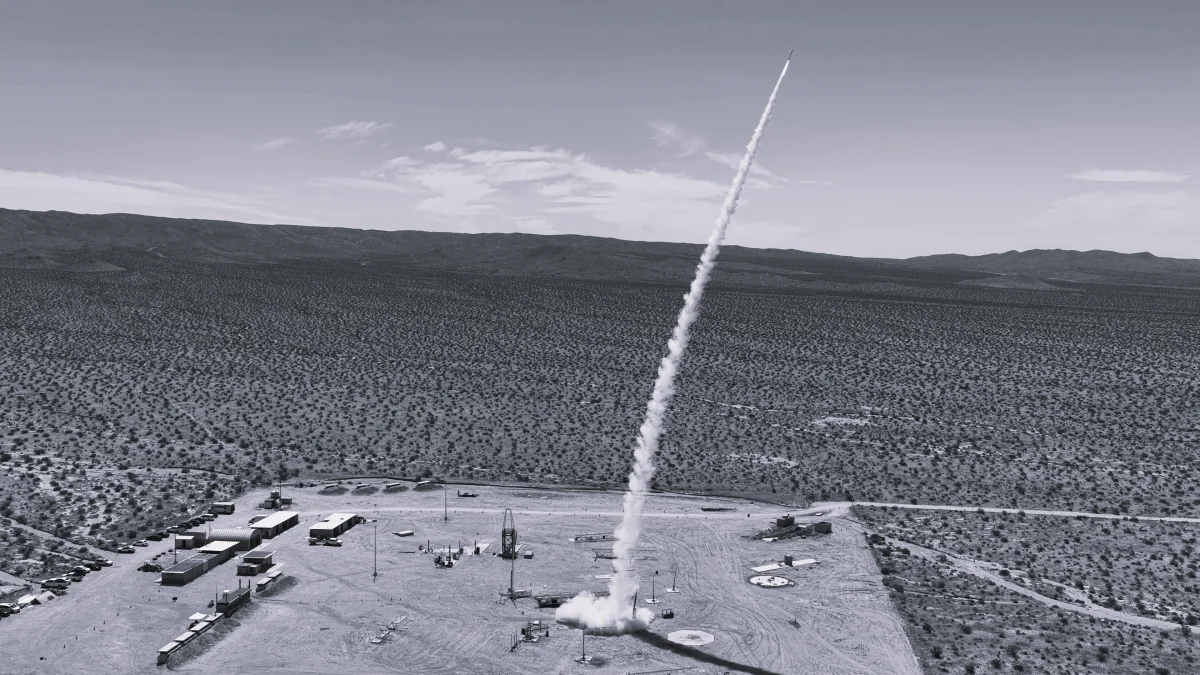
What the company accomplished with just a pre-seed round was notable, as prototypes were manufactured with limited capital and successfully launched multiple times prior to the Benchmark investment.
Founders and Engineering Velocity
That efficiency is in stark contrast to the slow-moving, high-cost development models used by traditional defense primes. The startup’s velocity is driven by its co-founders, who bring years of aerospace and defense engineering experience. Brody Franzen served as deputy chief engineer at Virgin Galactic before joining Castelion, a hypersonic missile startup, while Aris Simsarian previously led rocket engine testing at Virgin Orbit.
The duo launched Furientis after realizing the U.S. military is facing a severe shortage of exquisite missiles, which can cost around $3 million each, to counter inexpensive adversary threats, Franzen noted.
According to Franzen, the U.S. Navy receives a mere 300 to 500 interceptor missiles annually, compared to foreign production rates that vastly outpace domestic output.
The founders noted that production deficits drove the decision to start the company.
Manufacturing Approach
Furientis is not aiming to match the performance of best-in-class missile interceptors; instead, it is designing and manufacturing its systems so they can be assembled quickly from readily available components. As a result, each unit costs a fraction of legacy interceptors, a compelling value proposition for a Pentagon desperate to scale inventory within strict budget limits.
Unlike traditional defense primes such as Raytheon and Lockheed Martin, which are bogged down by long design cycles, Furientis has been testing its missiles in the field frequently. The startup’s ultimate goal is to manufacture 1,000 systems a year in each factory. The company operates out of a facility in Los Angeles and conducts trial launches in New Mexico.
Market Landscape
Given the need, Furientis is not the only company working on helping the government restock its stockpiles. Larger defense startups like Anduril, Castelion, and Shield AI are also racing to build mass-produced interceptors, while traditional primes scramble to modernize their own manufacturing cycles.
Investors remain optimistic about market opportunities for multiple companies operating within this defense sector.