Railway Automation
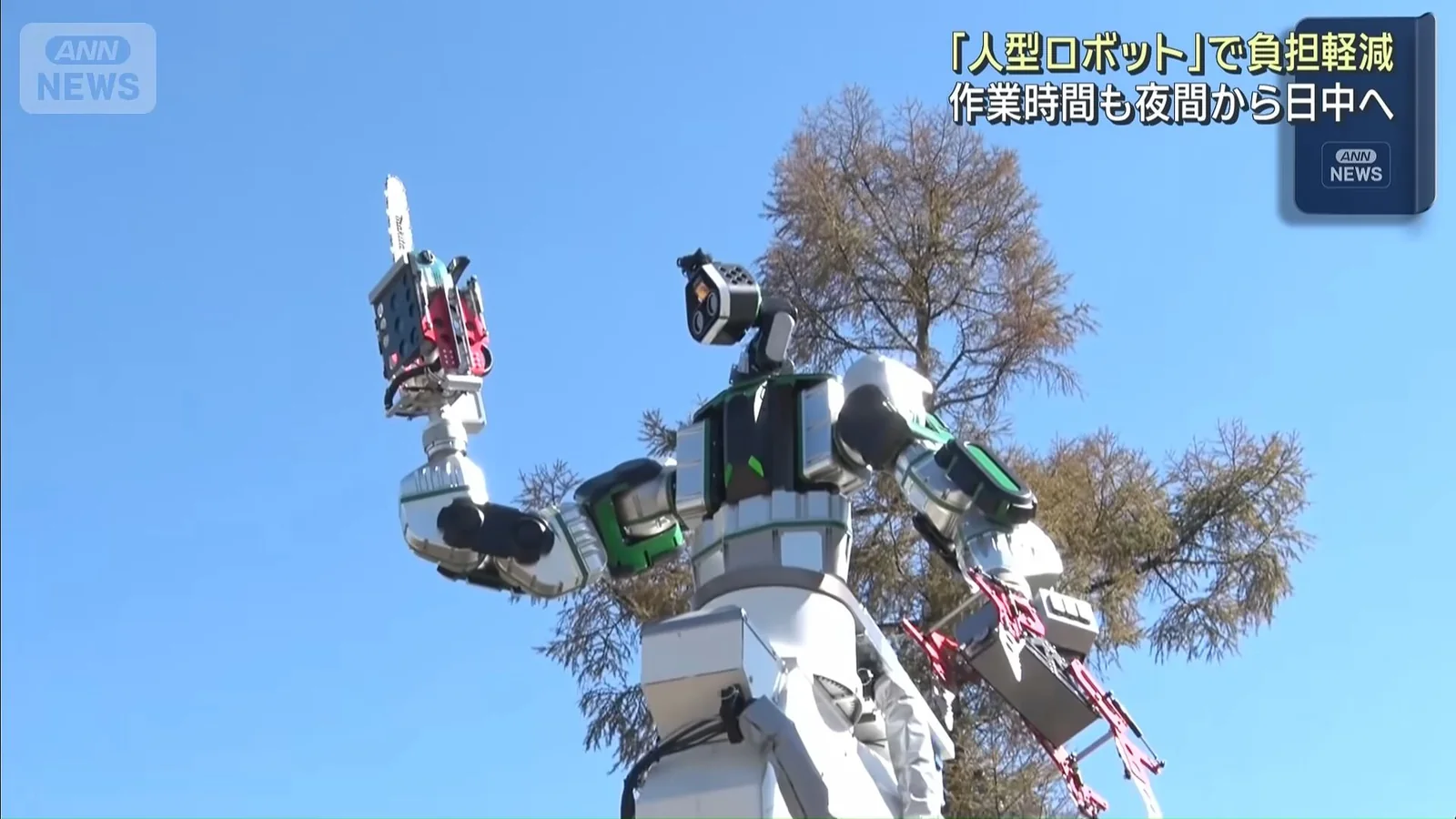
A humanoid robot featuring a chainsaw arm was recently demonstrated in action on Japanese television. The rail truck-mounted machine was deployed by Japanese railway firm JR East to clear tree branches that posed hazards to railway tracks. While the heavy machinery's chainsaw and grabber arms are currently remotely controlled by a human operator, JR East is progressively integrating automation and robotic technologies across its infrastructure to improve safety, efficiency, and round-the-clock maintenance operations.
Future iterations of the maintenance system could operate autonomously using AI-based image analysis to automatically detect and address rail obstructions.
Adopting AI Operations
JR East is the largest passenger railway operator in Japan, known for managing high-speed bullet train routes alongside diverse business interests. The firm maintains an active approach to technology adoption, utilizing company-wide software tools, disaster recovery algorithms, and AI-equipped drones for infrastructure inspections.
Addressing Labor Shortages
Reports indicate that the specialized chainsaw mechanism has been available to engineers for months, though public demonstrations remain rare. The transit operator is increasingly turning to advanced automation to counteract ongoing labor shortages within heavy maintenance sectors.
Maintenance workflows have also experienced a broader operational shift toward daytime scheduling to benefit worker safety, prompting more visibility for specialized machinery.
The convergence of workforce constraints and hardware advancements makes the deployment of specialized infrastructure maintenance robots increasingly viable for modern transit networks.