Introduction to Hark Pro
Tech firms continue to hunt for the user experience that will make an AI personal assistant a must-have product.
Hark, a startup founded less than a year ago by serial founder Brett Adcock, is launching the wide release of Hark Pro. Users can access the service for free, with a subscription tier available for heavy users.
The company sees its mission as building a user interface for AI rather than creating general intelligence. The foundation is a model trained specifically for computer use, allowing Hark Pro to operate a computer on behalf of the user.
Rather than existing strictly as an app, Hark aims to create an operating system for future AI computers.
User Interface and Capabilities
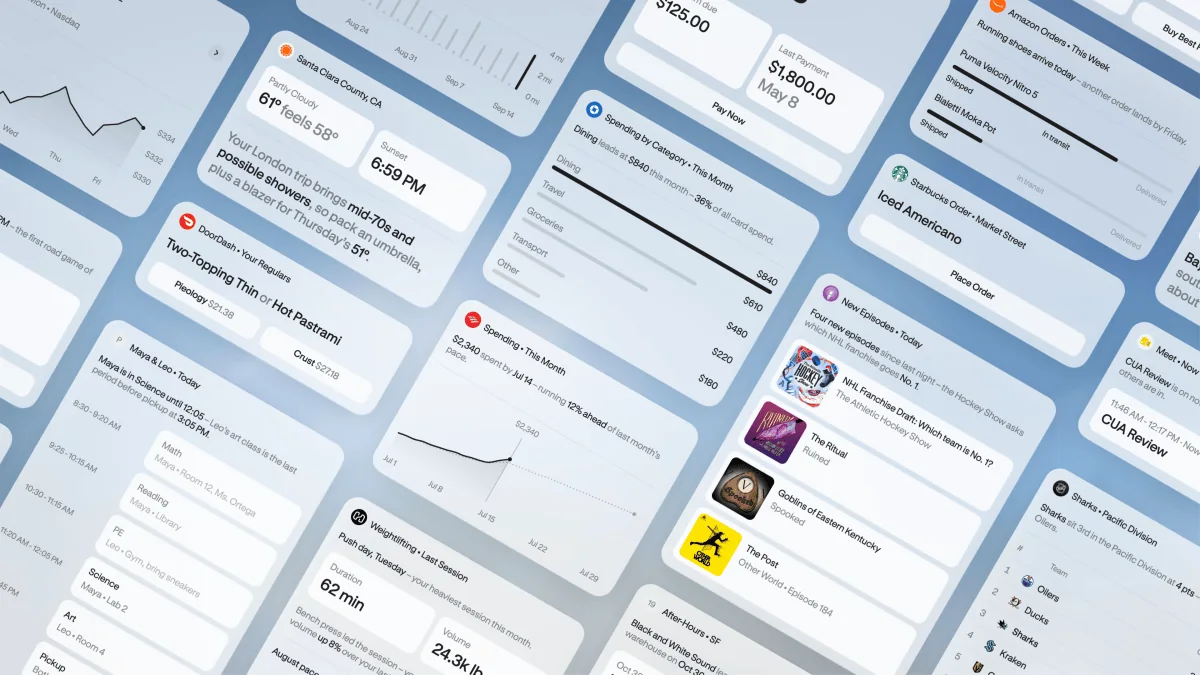
Hark Pro features a full-screen experience with a central chat dialog and a feed populated by prompts for actions and visualizations called "panels" that offer mini-dashboards. The background utilizes custom imagery tailored to local weather and time.
Users can configure the assistant to access their digital life, including email, calendar, hard drives, and payment cards, enabling it to manage digital tasks alongside answering standard queries.
Abidur Chowdhury, head of design at Hark and a former Apple staffer, demonstrated how the product proactively identifies pending tasks, such as expense approvals, email responses, and travel planning.
A notable capability demonstrated by the assistant was recognizing a colleague's need to renew a car registration and successfully handling the process through the state agency's website.
Privacy and Trust
Hark displays how the agent navigates the web in a small visible window, a UX choice intended to build trust with users by showing that the agent is performing actions correctly.
A core part of Hark's pitch centers on privacy, distinguishing itself from larger tech platforms by stating it does not rely on selling ads or harvesting user data, addressing growing cybersecurity and profiling concerns.
Chowdhury notes that while the system analyzes user needs to provide assistance, its focus remains strictly task-related rather than profiling individuals.
Hardware Plans and Future Outlook
Hark distinguishes its software through its ambition to fully substitute for computer interfaces and execute tasks end-to-end without requiring user intervention.
Chowdhury encourages critical comparisons with competitors, asserting that the model delivers better end-to-end results.
While training specifically for computer use makes Hark's model faster and more cost-effective for those tasks, questions remain regarding potential trade-offs in broader knowledge compared to frontier large language models.
In addition to software, Hark plans to release an AI-native hardware device in 2027 to support its platform.
The company remains tight-lipped about the specific form factor while avoiding the design pitfalls of existing wearable cameras.
Chowdhury remarked on the enduring nature of computing interfaces, noting that typing commands into a terminal remains prevalent decades later.